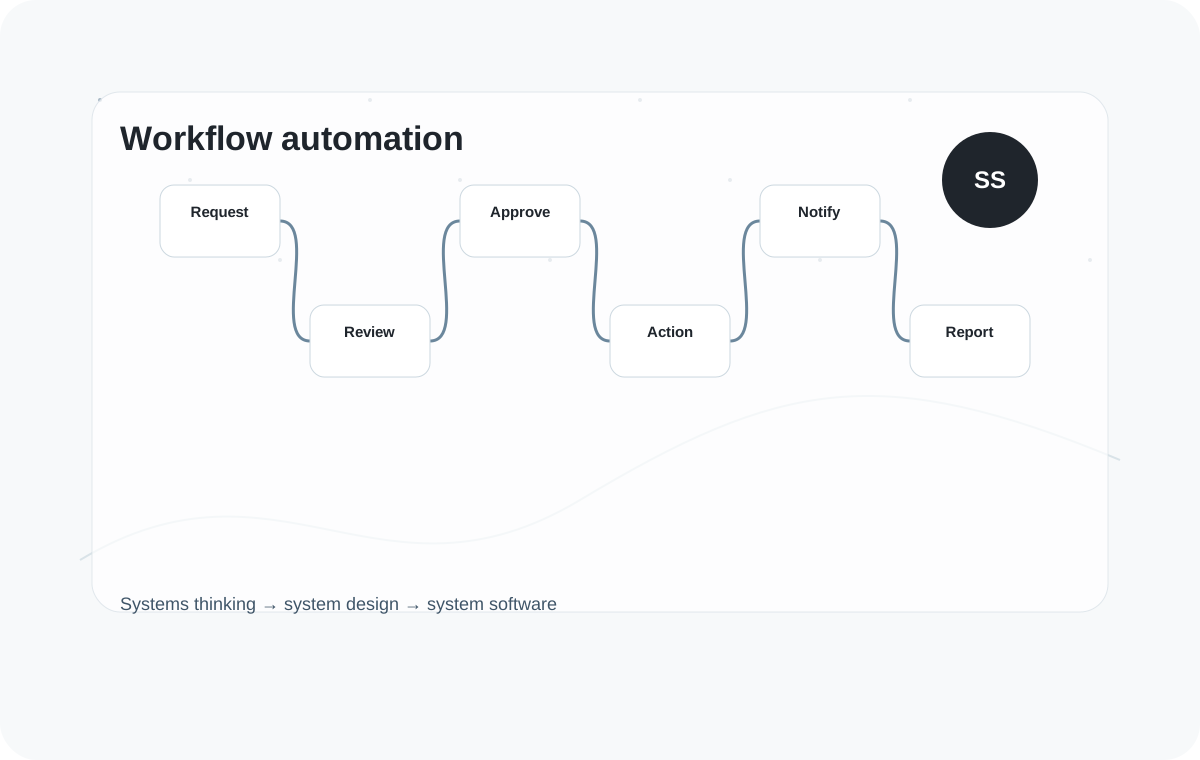
Workflow automation built around real business processes
Many businesses run important processes through a mixture of spreadsheets, emails, shared folders, manual checks, disconnected systems and individual knowledge.
That can work while the process is small. But as the business grows, manual workflows become harder to control, harder to report on and harder to improve.
System Software designs and builds custom workflow automation software for UK businesses that need clearer processes, fewer manual handoffs and better visibility of work in progress.
We focus on practical automation that supports the way your organisation actually works — not generic tools that force your teams into rigid processes.
When workflow automation makes sense
Workflow automation is valuable when important work depends on people remembering what to do next, manually updating multiple systems, chasing approvals or passing information between teams by email.
It may be time to automate a workflow if:
- Tasks are tracked in spreadsheets, inboxes, shared folders or chat messages.
- Approvals depend on manual chasing or unclear ownership.
- Teams duplicate data between ERP, CRM, WMS, finance, e-commerce or internal systems.
- Work gets delayed because people cannot see what stage a job, order or request is at.
- Reporting depends on manual updates or one person’s knowledge.
- Exceptions, errors or bottlenecks are only spotted after they have caused problems.
- Processes work, but only because experienced staff know the workarounds.
- You need a clearer, more reliable way to manage repeatable business processes.
What we can automate
We build workflow automation software that helps teams move work from one stage to the next with less friction, better visibility and fewer manual updates.
- Order processing workflows
- Job and work-in-progress tracking
- Approval and sign-off processes
- Customer onboarding workflows
- Quoting, pricing and review processes
- Production, warehouse and fulfilment workflows
- Quality checks, inspections and compliance records
- Internal request and task management
- Supplier, customer and partner workflows
- Notifications, reminders and escalation rules
- Dashboards and operational reporting
- Integration between existing business systems
Custom workflow software, integration or AI automation?
Not every workflow problem needs a completely new system.
Sometimes the best answer is a focused custom application. Sometimes it is integration between existing systems. Sometimes it is a staged improvement that removes the most manual parts of the process first.
In some cases, automation may also include AI-assisted steps — but only where the data, systems and governance are ready.
- Bespoke software development when the workflow needs a custom system built around your business.
- System integration when the main issue is moving data between existing platforms.
- Spreadsheet replacement when important workflows depend on manual files.
- Digital transformation when workflow automation is part of wider operational change.
- Agentic AI when there is potential for AI to assist with repeatable decisions, routing, research or actions.
What better workflow automation can give you
The aim is not to automate for the sake of it. The aim is to make work easier to manage, easier to measure and easier to improve.
- Clearer ownership of tasks, stages and approvals
- Fewer manual updates and duplicated entries
- Better visibility of work in progress, exceptions and bottlenecks
- More reliable handovers between teams
- Automated notifications, reminders and escalation paths
- Cleaner data for reporting and decision-making
- Integration with systems your business already uses
- Processes that are easier to train, support and scale
Built for operational businesses
We are especially well suited to manufacturers, B2B service providers, wholesalers, engineering firms and growing startups where workflows are tied closely to real operational activity.
That might include moving an order through production, tracking a customer request, coordinating a job, managing approvals, handling exceptions or keeping multiple systems aligned.
We take the time to understand how the process works today before recommending what should be automated, integrated, simplified or rebuilt.
Built by senior engineers
Workflow automation projects often fail when the process is misunderstood or when the software simply recreates existing complexity in a new tool.
Our model is different. Your project is led and built by experienced engineers who can understand the business process, challenge unnecessary complexity and design software that supports practical, reliable operations.
That means clearer decisions, better architecture and systems that are easier to support long term.
Our approach
Understand
We map the workflow, users, systems, data, approvals, exceptions and pain points.
Simplify
We identify what should be automated, what should be integrated and what should be simplified before anything is built.
Build
We build practical workflow software with clear stages, ownership, visibility and integration where needed.
Improve
After launch, we can support and evolve the workflow through retained development or staged improvements.
Suitable project types
We are a good fit for focused workflow automation projects, typically in the £20k–£50k range, and for retained development relationships where workflows need to keep improving over time.
That could mean replacing a manual approval process, building a job tracking system, connecting workflow data between platforms, improving operational reporting or creating a custom system around a process that off-the-shelf tools cannot handle properly.
Frequently asked questions
What is custom workflow automation software?
Custom workflow automation software is software designed to manage, automate and improve a specific business process. It can help move work between stages, assign ownership, trigger notifications, manage approvals, integrate systems and provide reporting.
When should a business automate a workflow?
It is worth considering when a repeatable process relies on spreadsheets, email, manual checks, duplicated data entry or informal handovers. The stronger the operational risk or reporting need, the stronger the case for automation.
Can workflow automation integrate with our existing systems?
Yes. Workflow software can integrate with ERP, CRM, WMS, finance, e-commerce, cloud and legacy systems where suitable. If integration is the main issue, our system integration service may be the best place to start.
Do we need a completely new system?
Not always. Sometimes a smaller custom tool, an integration, a dashboard, or a staged improvement plan is enough. We help identify the most practical route before recommending a build.
Can you automate spreadsheet-based workflows?
Yes. We can help replace spreadsheet-heavy workflows with custom systems that provide better visibility, control and reporting. See our spreadsheet replacement page for more detail.
Can AI be part of workflow automation?
Yes, in the right circumstances. AI can help with routing, research, summarisation, classification or repeatable actions, but it needs the right data, integrations and safeguards. See our Agentic AI service for more detail.
How much does custom workflow automation software cost?
Cost depends on workflow complexity, number of users, integrations, reporting needs and delivery approach. Focused bespoke workflow projects often sit in the £20k–£50k range, with retained development available for ongoing improvements.