
Manual transfer between systems
Teams export, re-key and reconcile information because platforms do not exchange data reliably.
Connect
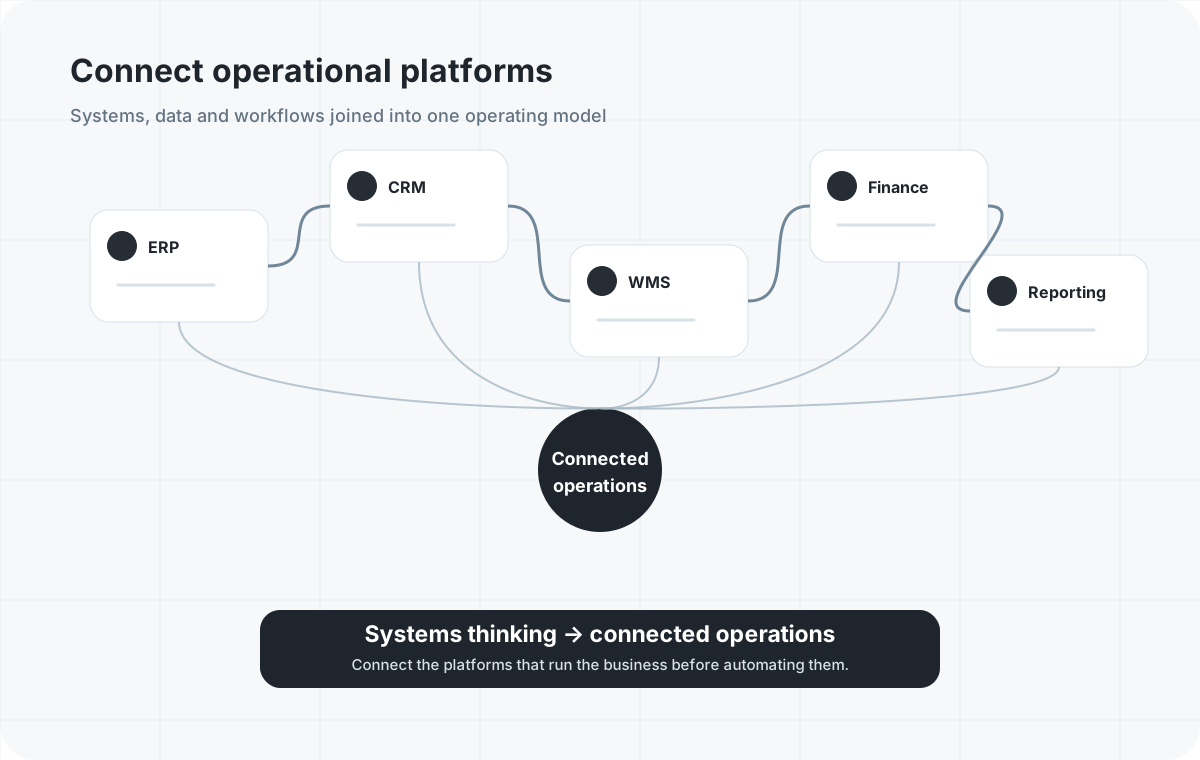
We help operational businesses join fragmented platforms into a coherent operating model, improving visibility, reducing manual effort and creating foundations for automation and AI.
Integration is not just a technical exercise. It is systems design: understanding how information should move through the organisation, where decisions are made and where operational friction appears.
When disconnected systems slow the business down
Operational friction often appears when departments have working systems, but the systems do not work together.
Teams export, re-key and reconcile information because platforms do not exchange data reliably.
Sales, operations, warehouse and finance work from different numbers and definitions.
Leaders wait for reports and explanations before they can understand what is really happening.
Processes stall when work moves between teams, systems or external partners.
CSV files, spreadsheets and manual checks become unofficial integration layers.
AI cannot be trusted until the underlying systems, permissions and data flows are coherent.
Our approach
We connect systems around the way the business needs to operate, not around a preferred tool.
Understand systems, data ownership, workflows, exceptions and business-critical dependencies.
Identify where connection will create the most operational value and reduce the most friction.
Define integration patterns, APIs, data flows, validation rules and governance.
Implement reliable connections, middleware, workflow automation and monitoring.
Optimise reporting, automation and AI readiness as the platform matures.
Operational visibility is often the missing link between system modernisation, workflow automation and successful AI adoption.
Outcomes
The goal is not integration for its own sake. The goal is a business that can see, act and improve with confidence.
Information moves through the business with less delay, duplication and uncertainty.
Staff spend less time acting as the integration layer between systems.
Connected, governed systems create more reliable inputs for automation, Copilot and AI workflows.
Next step
These related pages move from connected systems towards operational visibility, automation and AI readiness.
Connect ERP, CRM, WMS, finance and specialist systems with APIs and governed data flows.
Explore system integrationConnect storefronts to stock, order management, fulfilment and finance.
Explore ecommerce systemsCreate a trusted operational data foundation for reporting, automation and AI.
Explore unified dataFAQ
We commonly connect ERP, CRM, WMS, finance, ecommerce, Microsoft 365, Azure and bespoke operational systems.
No. APIs are preferred where available, but robust CSV, database, event and middleware patterns can still be appropriate depending on the system and risk profile.
Not always. Many organisations gain value by connecting existing platforms first, then replacing or modernising the areas that create the greatest friction.
Start with the system
We can help you map the operational system before deciding what to connect, replace or automate.