
Double entry
Staff re-key information between spreadsheets, portals, finance systems and operational tools.
Automate
Automation works best when it is designed around how the business actually operates.
We help operational businesses replace spreadsheet-driven processes, design workflow systems and build software that connects people, data and decisions.
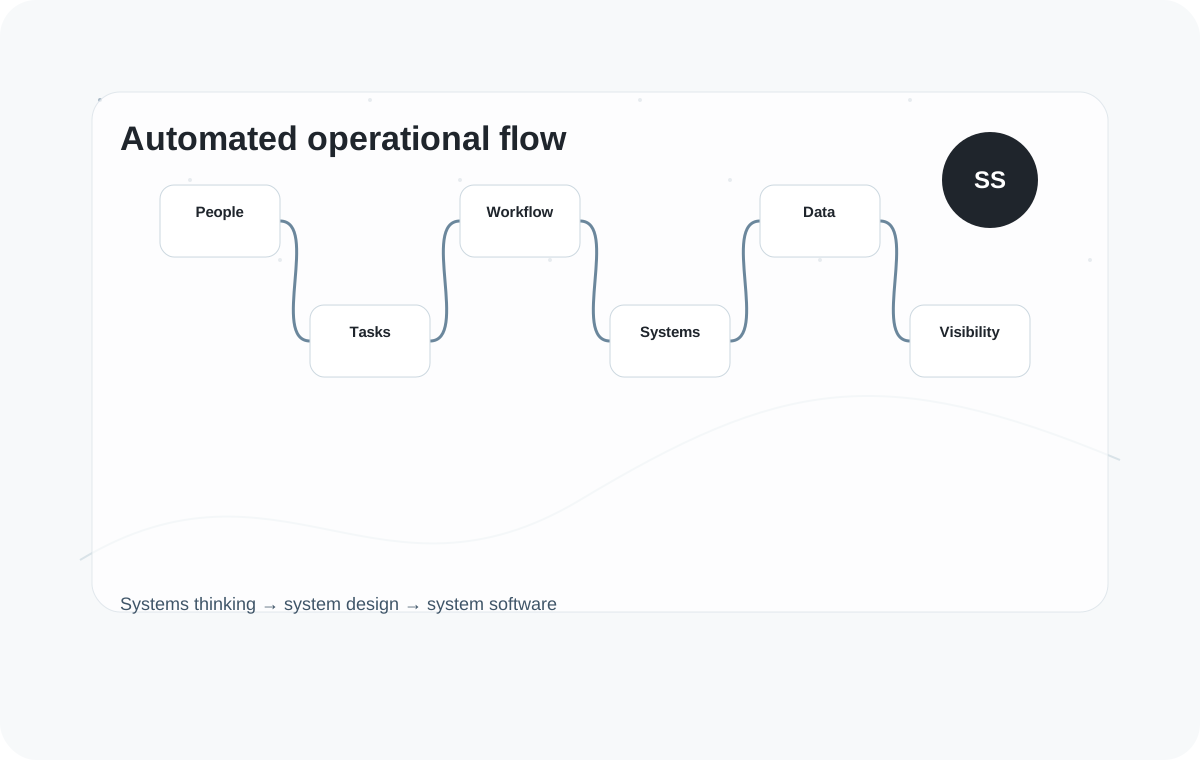
Operational friction
Teams usually create manual workarounds because core systems do not reflect how the operation now works. Automation is valuable when it removes those workarounds rather than simply digitising them.
Staff re-key information between spreadsheets, portals, finance systems and operational tools.
Critical processes depend on files that are difficult to govern, audit or scale.
Work moves through email, shared folders and informal updates instead of controlled workflows.
Managers cannot see real-time status, bottlenecks, exceptions or operational workload.
Processes rely on individual knowledge rather than repeatable, supported systems.
More orders, jobs or requests create more administration rather than more operational leverage.
How we approach automation
We apply systems thinking to identify where automation will genuinely improve flow, visibility and control.
Understand the process, handovers, data, exceptions and operational decisions.
Remove unnecessary steps and clarify ownership before adding technology.
Define the workflow, data model, permissions, integrations and reporting needs.
Deliver the software, automation or integration layer that supports the improved process.
Measure usage, bottlenecks and outcomes so the system continues to evolve with the business.
Outcomes
The result is a more visible, repeatable and scalable way of working.
Less time spent moving information between systems and spreadsheets.
Teams know what is happening, who owns the next step and where work is blocked.
Growth can be supported without increasing manual coordination at the same rate.
Automation entry points
These pages cover the most common routes into workflow automation and operational software.
Design software around the operational process rather than forcing the business into a generic tool.
Explore →Replace email-led, spreadsheet-led and manually coordinated processes with controlled workflows.
Explore →Move business-critical spreadsheets into governed, scalable operational systems.
Explore →FAQ
Start with a process that is business-critical, repetitive and difficult to manage manually. The best first automation is usually where better workflow control and visibility create immediate operational value.
No. Sometimes the right answer is integration, configuration, Microsoft tooling, a workflow platform or a small bespoke operational layer. We start with the business problem before recommending technology.
Yes. Many automation projects are designed to sit around existing ERP, CRM, finance, warehouse or line-of-business systems rather than replacing them immediately.
Start with the workflow
We can help you identify where automation will create the greatest business value.
Book an automation conversation