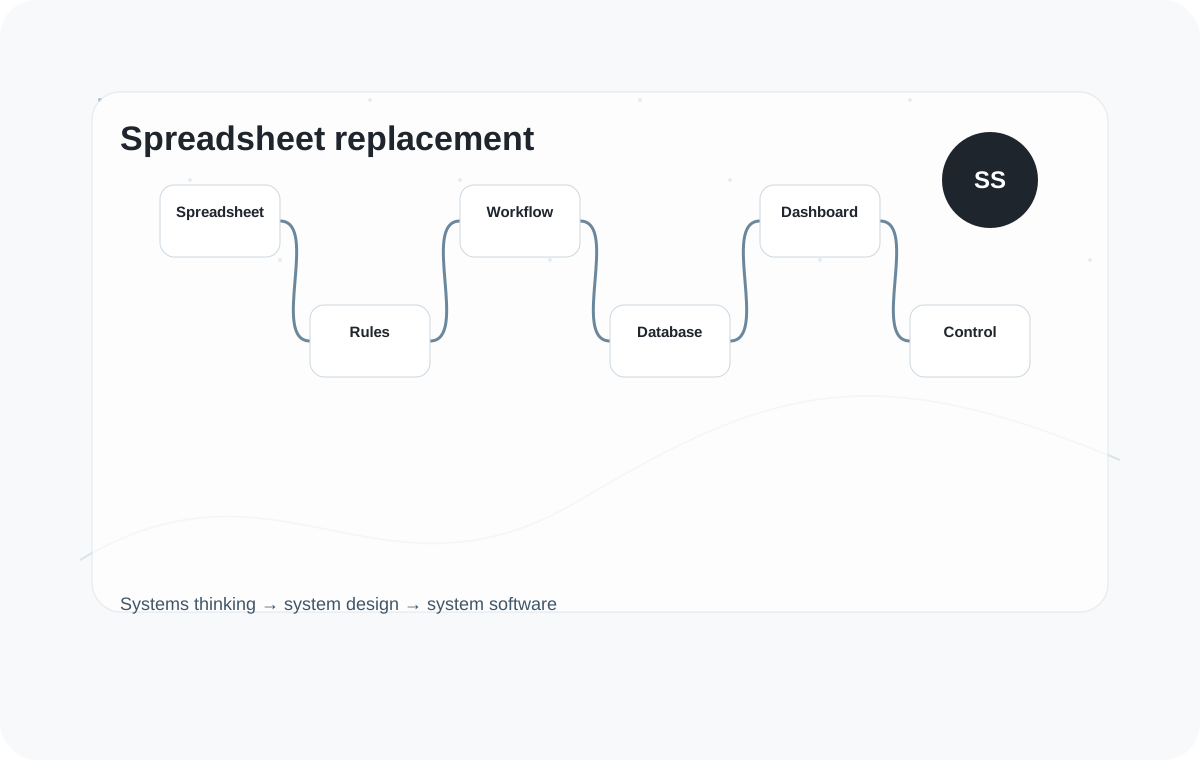
When spreadsheets become business-critical systems by accident
Spreadsheets are useful, flexible and familiar. They are often the fastest way to solve a problem when a business is growing, changing or filling gaps between existing systems.
But over time, spreadsheets can become unofficial business-critical systems. They start managing orders, stock, schedules, approvals, reports, customer data, pricing, forecasts or operational decisions.
At that point, the problem is no longer the spreadsheet itself. The problem is that important business processes are being handled by tools that were never designed to provide reliable workflows, controlled access, audit trails, integrations or long-term scalability.
System Software helps UK businesses replace spreadsheet-heavy processes with custom software, workflow platforms, dashboards and integrated systems that are easier to manage, support and improve.
Signs your business has outgrown spreadsheets
You may not need a large digital transformation project. But it may be time to review your spreadsheet-based processes if:
- Different people are using different versions of the same spreadsheet.
- Reports depend on manual updates, copy-and-paste work or one person’s knowledge.
- Data is duplicated between spreadsheets, finance systems, CRM, ERP, WMS or e-commerce platforms.
- Teams use email, chat or shared folders to manage approvals and handovers.
- Important decisions rely on data that is difficult to verify.
- Errors are hard to spot until they have already affected customers, stock, jobs or reporting.
- The spreadsheet works, but only because people have built workarounds around it.
- The process is too important to be owned by a single file or a single person.
What custom software can replace
We design and build systems that replace manual spreadsheet-driven work with practical, reliable software.
- Order tracking spreadsheets
- Job and work-in-progress trackers
- Stock, inventory and warehouse spreadsheets
- Production planning tools
- Customer, supplier or asset registers
- Pricing, quoting and approval workflows
- Operational reporting packs
- Manual task lists and handover sheets
- Compliance, audit or inspection records
- Forecasting and capacity planning tools
From spreadsheet workaround to reliable business system
Replacing spreadsheets does not always mean building a large platform from scratch.
Sometimes the right answer is a focused custom application. Sometimes it is a workflow tool, a reporting dashboard, an integration layer, or a staged plan that keeps parts of the current process while removing the highest-risk manual work first.
We help you work out the most sensible route before anything is built.
- Bespoke software development when the process needs a custom system built around your business.
- System integration when the main issue is disconnected data between existing platforms.
- Legacy system replacement when spreadsheets are compensating for an older system the business has outgrown.
- Digital transformation when spreadsheet replacement is part of wider operational change.
What a better system can give you
The aim is not simply to “turn a spreadsheet into an app”. The aim is to improve how the business works.
- Clearer ownership of tasks, records and workflows
- Fewer manual updates and duplicate entries
- Better visibility of jobs, orders, stock, performance or exceptions
- Controlled access for different users and teams
- Improved reporting and more reliable data
- Integration with existing systems such as ERP, CRM, WMS, finance or e-commerce platforms
- Processes that are easier to train, support and improve
- A system that can evolve as the business grows
Built for manufacturers and B2B businesses
Spreadsheet-heavy processes are common in operational businesses. Manufacturers, engineering firms, wholesalers and B2B service providers often use spreadsheets to fill gaps between departments, systems and workflows.
That might include production planning, order tracking, stock visibility, job management, quoting, customer reporting or internal approvals.
We are especially well suited to businesses where software has to support real-world operations, not just a generic back-office process.
Our approach
Understand
We review the spreadsheet, the process around it, who uses it, where the data comes from and where the risks are.
Prioritise
We identify which parts of the process should be replaced, automated, integrated or left alone for now.
Build
We design and build a practical system with senior engineers, keeping the focus on reliability, usability and business value.
Improve
After launch, we can support and evolve the system through retained development or staged improvements.
A lower-risk first step
Replacing a spreadsheet-based process does not have to mean changing everything at once.
For many businesses, the right approach is to start with the highest-value or highest-risk process, build a focused system, prove the value, and then extend from there.
That makes the work easier to control, easier for users to adopt and easier to align with the way the business already operates.
Frequently asked questions
When should a business replace spreadsheets with software?
It is worth considering when spreadsheets are being used to manage important processes, shared data, operational decisions, approvals, reporting or customer-facing work. The more people, data and risk involved, the stronger the case for a more reliable system.
Can you turn our existing spreadsheet into software?
Yes, but the best result usually comes from understanding the process behind the spreadsheet rather than simply copying it into an application. We look at what the spreadsheet does, why it exists, who uses it and what the improved process should look like.
Do we need a completely new system?
Not always. Sometimes the best answer is to integrate existing systems, improve reporting, automate part of the workflow or modernise an older platform. We will help identify the most practical route.
Can the new system integrate with our existing tools?
Yes. A custom system can integrate with platforms such as ERP, CRM, WMS, finance, e-commerce and cloud systems where suitable. This helps reduce duplicate entry and keeps data flowing between the tools your business already uses.
How much does spreadsheet replacement software cost?
Cost depends on the size of the process, the number of users, integrations, reporting needs and complexity. Focused bespoke software projects often sit in the £20k–£50k range, with retained development available for ongoing improvements.
Will staff still be able to export data to Excel?
Yes, where useful. Replacing spreadsheets does not mean removing Excel completely. It often means using software as the reliable source of truth while still allowing exports for analysis, finance or operational review.