Business-critical workarounds
Key processes rely on spreadsheets, exports, manual checks or knowledge held by a few people.
Modernise
We help operational businesses reduce risk, improve visibility and create stronger foundations for integration, automation and AI.
Modernisation is not simply replacing software. It is the process of understanding how the business works, protecting what matters and designing systems that can evolve.
Operational signals
Modernisation usually starts when existing systems still work, but no longer give the business enough control, visibility or confidence.
Key processes rely on spreadsheets, exports, manual checks or knowledge held by a few people.
Leaders wait for information to be gathered, cleaned and explained before decisions can be made.
Every improvement feels risky because processes, data and systems are tightly coupled or poorly understood.
Legacy platforms, old integrations and unclear ownership make continuity harder to guarantee.
Growth creates more repetitive work instead of better operational flow.
AI and automation cannot progress because data, governance and platforms are not ready.
Our approach
We modernise around the way the business operates, not around a preferred technology stack.
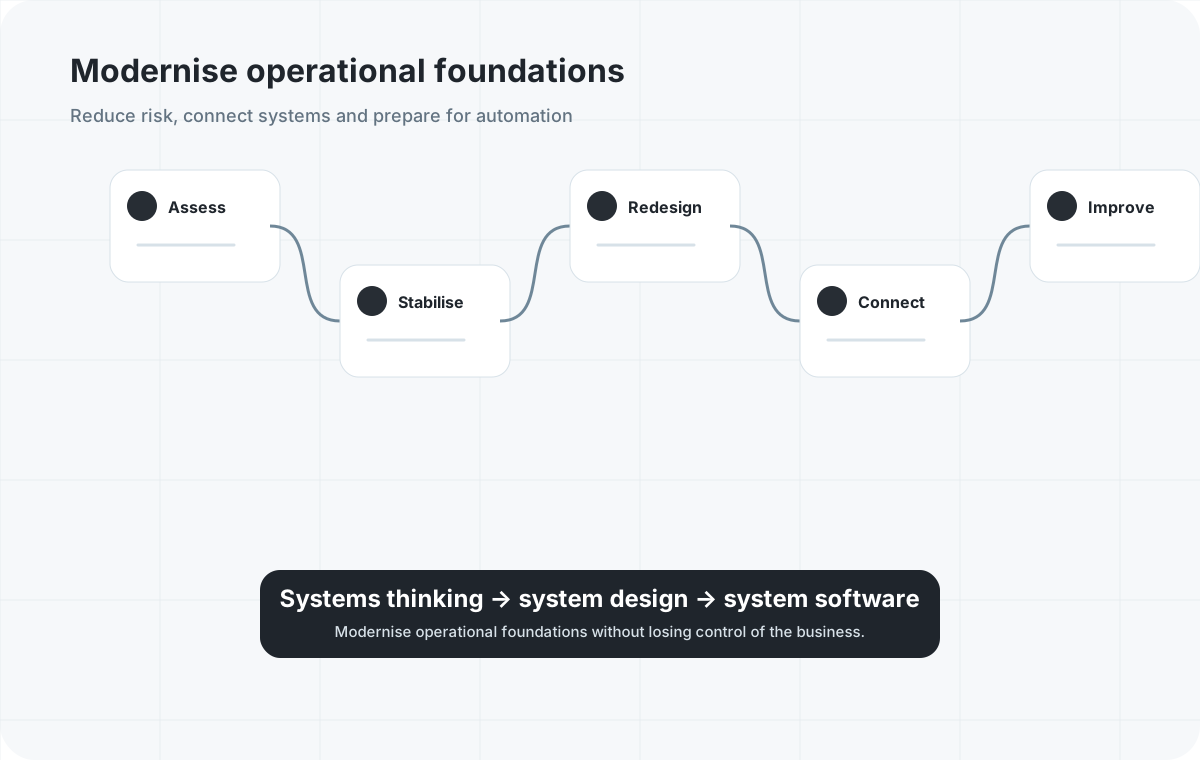
Map people, process, systems, data and operational risk before recommending change.
Protect critical workflows, data and reporting while the modernisation path is defined.
Shape the future operating model, integration points and data foundations.
Move in controlled stages with migration, testing, training and continuity planning.
Continue optimising workflows, reporting and automation after the initial change.
Outcomes
The goal is not a newer system for its own sake. The goal is a business that is easier to operate, understand and improve.
Lower dependency on fragile systems, manual controls and undocumented knowledge.
Better reporting and clearer status across the workflows that run the business.
Platforms and data designed to support integration, automation and future AI adoption.
Next step
Each page links naturally to the next stage in the operational transformation journey.
Safely replace ageing operational systems without losing business continuity.
Explore legacy replacementImprove the way the business works through connected systems and practical change.
Explore digital transformationCreate secure, governed cloud foundations for operational platforms.
Explore cloud infrastructureFAQ
Usually not. The safest approach is often staged modernisation that protects core operations while improving the areas that create the most risk or friction first.
No. The right answer may include integration, configuration, Microsoft platforms, cloud improvements, data foundations or bespoke development where the business process is genuinely distinctive.
We start by mapping dependencies, data flows and operational risk, then design migration and transition plans around business continuity.
Start with the system, not the software.
We start with how your business works, not with a list of technologies.