
Duplicate data entry
Staff key the same information into ERP, CRM, finance or warehouse systems.
System Integration
We design and build integrations that connect the systems your organisation already depends on, reducing duplicate work and improving operational visibility.
Good integration is more than moving data from A to B. It defines ownership, timing, validation, exceptions and the workflows that depend on accurate information.
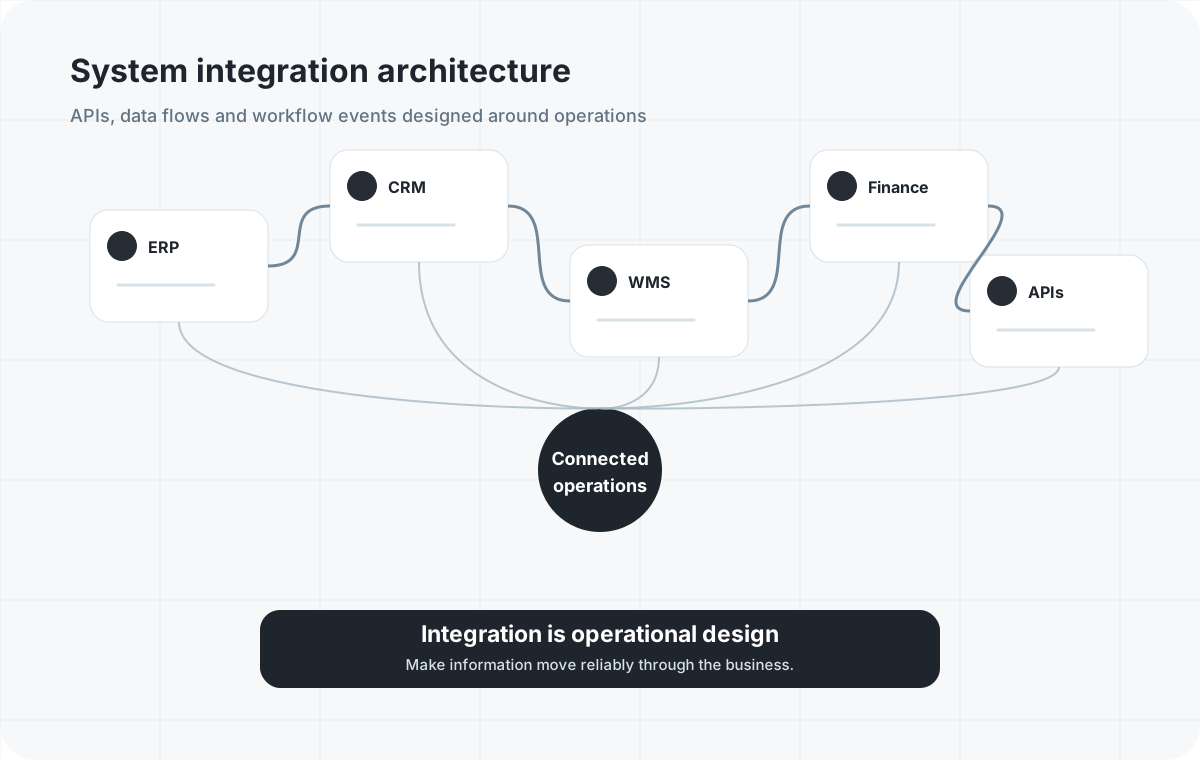
The hidden cost of systems that do not speak to each other
Disconnected systems create workarounds that become normal, expensive and difficult to control.
Staff key the same information into ERP, CRM, finance or warehouse systems.
Teams cannot see order, stock, customer or finance changes quickly enough.
Nobody is certain which system should be the source of truth for key records.
Old integrations fail silently, break during upgrades or cannot support new requirements.
Problems are solved through email and spreadsheets rather than controlled workflows.
Automation is risky when the underlying data flows are inconsistent or undocumented.
Our approach
We start with the business process, then select the right technical pattern.
Map systems, records, owners, triggers, users and operational dependencies.
Choose API, event, middleware, file or hybrid patterns based on risk and capability.
Define rules for data quality, error handling, reconciliation and auditability.
Build, test and monitor integrations using secure, maintainable engineering practices.
Support, measure and improve integrations as business processes evolve.
Operational visibility is often the missing link between system modernisation, workflow automation and successful AI adoption.
Outcomes
The value appears when people stop chasing information and systems start supporting the way work actually flows.
Key business records are synchronised with clear ownership and validation.
Orders, stock, customer information and financial events move without unnecessary manual intervention.
Connected systems provide a stronger foundation for reporting, analytics and AI.
Next step
These related pages move from connected systems towards operational visibility, automation and AI readiness.
Connect core operational platforms into a coherent business system.
Explore ERP integrationUse integrated systems as the foundation for consistent reporting and data governance.
Explore unified dataTurn connected data flows into controlled operational workflows.
Explore workflow automationFAQ
Yes. Where modern APIs are unavailable, we can often use database, file, middleware or staged migration approaches while managing risk carefully.
Yes. We design and build APIs, middleware and integration services for bespoke systems and third-party platforms.
We design validation, monitoring, logging and exception handling into the integration rather than treating them as afterthoughts.
Start with the system
Start with an integration review to understand where data, workflow and reporting are breaking down.