
Conflicting reports
Different teams produce different answers to the same operational question.
Unified Data
We help organisations connect fragmented data into governed foundations for reporting, operational visibility, automation and AI.
Most organisations already have the data they need. The problem is that it lives in different systems, formats and processes, making it hard to trust or use.
When data exists, but confidence is missing
Disconnected data creates operational uncertainty even when every individual system appears to be working.
Different teams produce different answers to the same operational question.
Spreadsheets, exports and human checks are used to align data between systems.
Managers wait for reports to be assembled before they can act.
Customers, orders, products, jobs or entities mean different things in different systems.
Workflow automation fails when the information driving it is incomplete or inconsistent.
AI outputs cannot be relied on when the underlying business data is fragmented or poorly governed.
Our approach
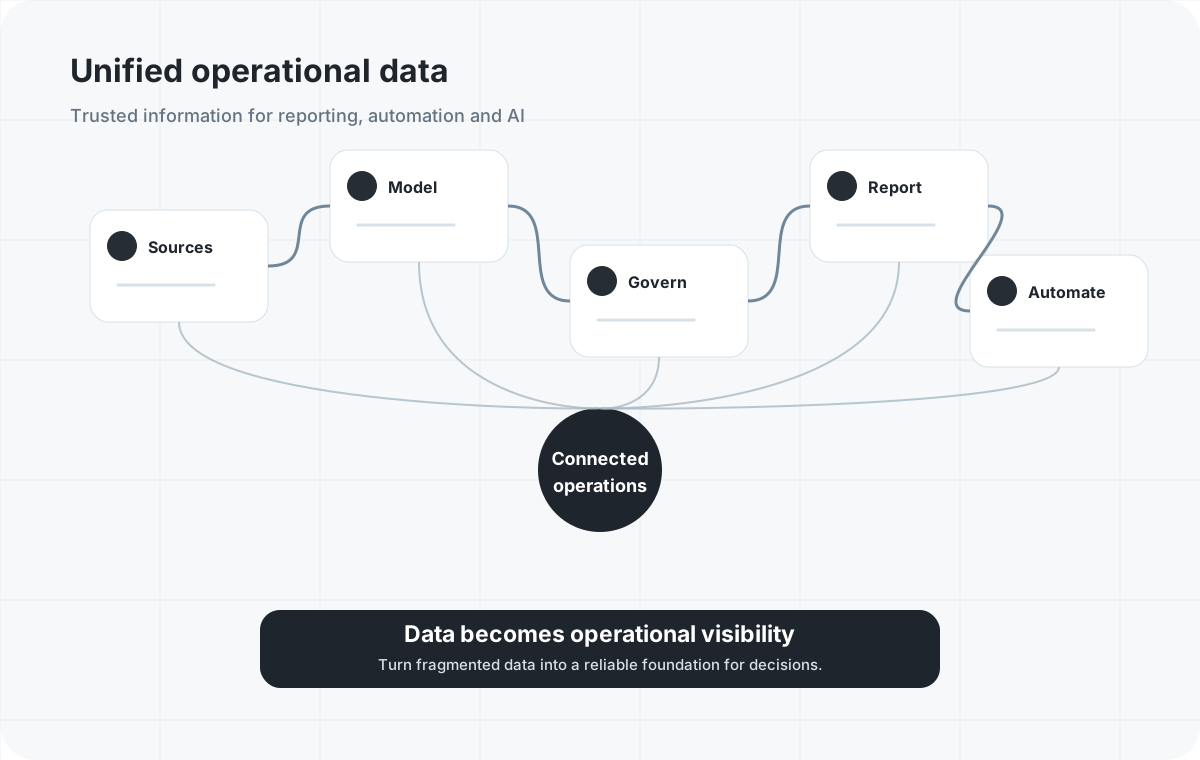
We focus on the decisions, workflows and reports the business needs, then design the data foundation to support them.
Define the operational questions, metrics and decisions that need trusted information.
Understand source systems, ownership, quality, definitions and data movement.
Create governed structures that represent the way the business actually operates.
Integrate data pipelines, reporting layers and operational systems.
Use trusted data for dashboards, workflow automation, forecasting and AI readiness.
Operational visibility
Most organisations already collect the information they need. The challenge is that it is spread across ERP platforms, CRM systems, spreadsheets, finance applications, operational tools and manual processes. Operational visibility is created when that information becomes consistent, connected and trusted.
See operational activity across departments, teams, systems and workflows from a single trusted source.
Spot delays, exceptions, duplicated effort and process issues before they become operational problems.
Give leaders and teams access to consistent information without relying on manual reporting exercises.
Operational visibility is often the missing link between system modernisation, workflow automation and successful AI adoption.
Outcomes
The goal is not a database. The goal is confidence in how the business is performing and what should happen next.
Leaders and teams work from consistent definitions and trusted information.
Less time is spent assembling reports and reconciling differences.
Structured, governed data supports Copilot, AI assistants and intelligent automation.
Common operational scenarios
The business benefits of unified data become most visible when information must flow across multiple departments, systems and operational processes.
Create a consistent operational view across sales, customers, orders, invoices and financial reporting. Reduce manual reconciliation and improve confidence in reporting across the organisation.
System integration →Connect production, stock, purchasing, scheduling and reporting information into a trusted operational picture. Improve visibility across production and fulfilment processes.
Digital transformation for manufacturers →Bring together jobs, requests, cases, tasks and operational metrics from different systems and spreadsheets. Create a stronger foundation for workflow automation and operational reporting.
Workflow automation →Provide AI platforms, Copilot and intelligent automation with governed and trusted business information. Reduce ambiguity and improve the reliability of AI-driven outcomes.
AI readiness →Next step
These related pages move from connected systems towards operational visibility, automation and AI readiness.
Connect the systems that create and update operational data.
Explore integrationAssess whether data, permissions and governance can support AI safely.
Explore AI readinessImprove how information is found, governed and used across the organisation.
Explore information discoveryFAQ
A unified data platform centralises data from multiple systems into a single accessible environment.
Not necessarily. The right approach may include reporting models, data pipelines, Microsoft Fabric, Azure, Power BI or simpler operational data structures depending on need.
Data is integrated using APIs, pipelines and connectors to ensure consistent flow and accessibility.
Yes. We can improve the data foundations that sit underneath tools such as Power BI, Excel, CRM reporting and operational dashboards.
AI tools need reliable, governed and accessible information. Unified data reduces ambiguity and helps AI outputs become more useful and trustworthy.
Start with the system
We can help identify the data foundations needed for better reporting, automation and AI.