Ageing operational software
Important workflows depend on old applications, Access databases, spreadsheets or unsupported platforms.
Legacy system replacement
We help organisations move from ageing, fragile or unsupported systems to modern operational platforms that preserve continuity and improve visibility.
A legacy system is rarely just old software. It is usually wrapped around workflows, data, reporting, users, integrations and business habits. Replacement needs to respect that whole system.
Operational signals
The trigger for replacement is often not failure. It is the increasing cost, risk and effort required to keep the business moving.
Important workflows depend on old applications, Access databases, spreadsheets or unsupported platforms.
Only a small number of people understand how the system, data and workarounds really operate.
The system cannot connect cleanly with ERP, CRM, finance, ecommerce, reporting or modern cloud services.
Operational and management reporting depends on exports, manual manipulation or inconsistent data.
Teams compensate for system limitations with re-keying, checking and parallel trackers.
Change becomes harder because the system is business-critical but increasingly difficult to maintain.
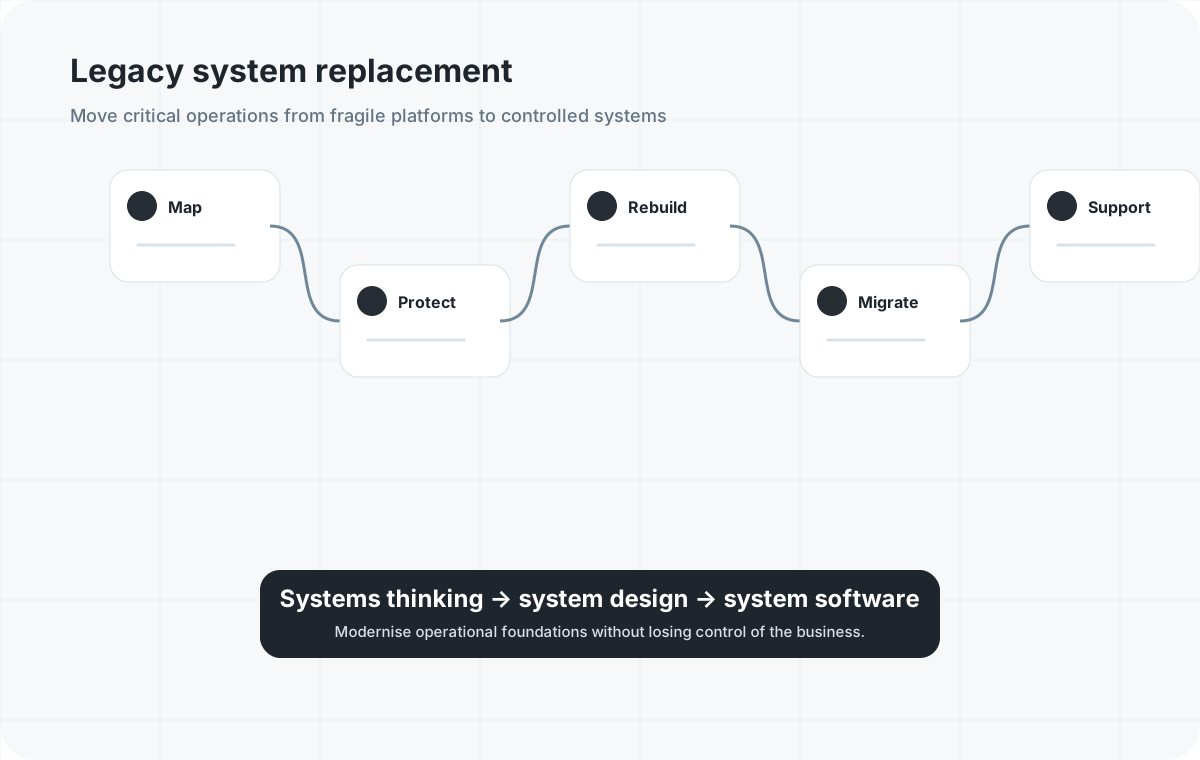
Our approach
We treat replacement as an operational transition, not just a development project.
Document workflows, data, decisions, users, integrations and critical business rules.
Identify what must keep working, what data must be preserved and where migration risk sits.
Define the target operating model, system architecture, reporting and integration approach.
Develop or configure the replacement platform in controlled, testable increments.
Move data and users through planned transition, training, validation and support.
Outcomes
Replacement should remove risk while creating a platform the business can extend, integrate and trust.
Critical workflows continue through migration, testing, rollout and support.
Important records, history and reporting structures are migrated carefully and validated.
The new platform supports integration, reporting, automation and long-term improvement.
Next step
Each page links naturally to the next stage in the operational transformation journey.
Understand risk, dependencies and options before committing to replacement.
Start with an assessmentConnect the replacement platform with the rest of the business.
Explore integrationCreate trusted reporting and AI-ready information foundations.
Explore unified dataFAQ
Yes. We can assess, redesign and replace Access databases, spreadsheet-led processes and older bespoke systems where they have become operationally critical.
We profile existing data, define migration rules, run test migrations, validate outputs and plan cutover around operational risk.
Yes. Replacement is usually designed around the systems you already need to keep, using APIs, data flows or controlled import/export where appropriate.
Planning to replace a critical legacy system?
We start with how your business works, not with a list of technologies.