
Unclear operational picture
Leaders struggle to see what is happening across teams, work, customers, stock or performance.
Digital transformation
We help operational businesses improve workflows, connect systems, strengthen data foundations and introduce practical automation without consultancy theatre.
Transformation succeeds when it changes how work flows through the organisation, not when it simply introduces more tools.
Operational signals
The real challenge is usually operational: unclear process ownership, fragmented information, manual effort and limited visibility.
Leaders struggle to see what is happening across teams, work, customers, stock or performance.
Teams work around each other because systems, data and processes have evolved separately.
Work is handled differently depending on person, department, spreadsheet or legacy habit.
Reporting and analysis take too long to influence day-to-day operations.
Repetitive work remains manual because the underlying process and data flows are not designed.
AI initiatives lack the data quality, governance and workflow context needed to create value.
Our approach
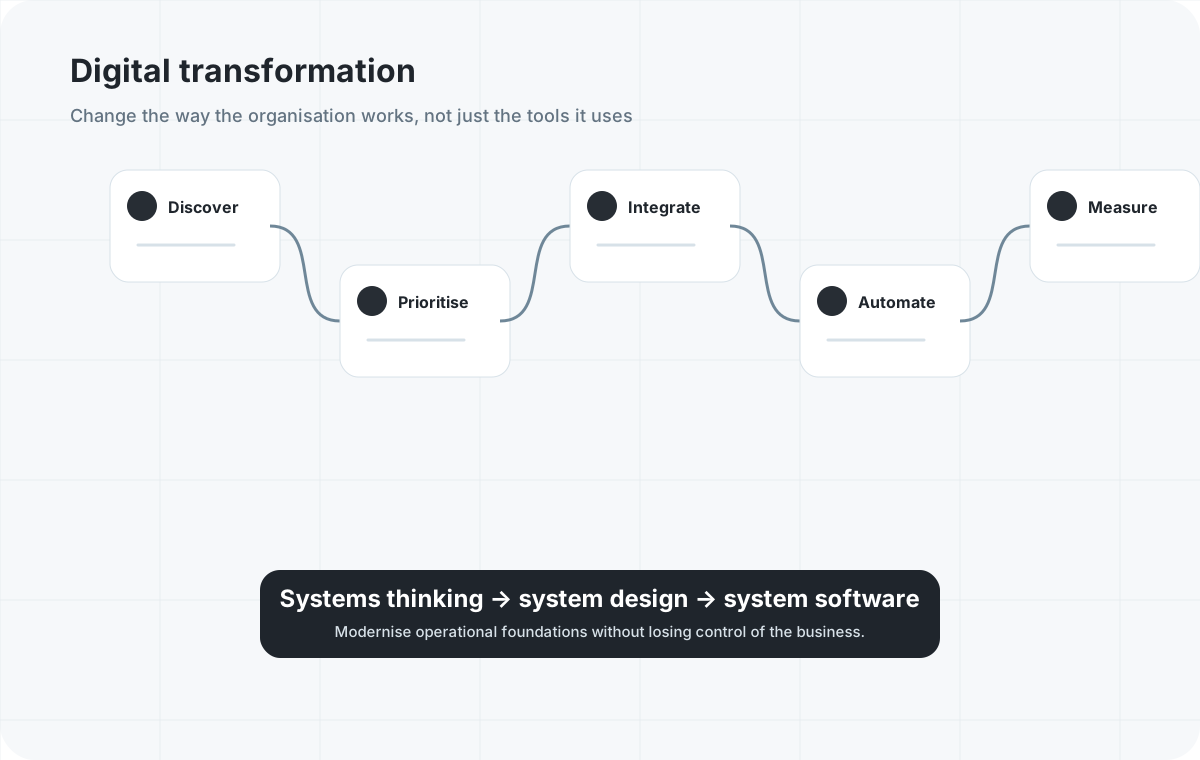
We combine systems thinking with practical delivery so transformation stays grounded in real workflows and outcomes.
Understand the operational system: people, process, systems, data and decisions.
Identify the areas where change will reduce risk, improve visibility or unlock capacity.
Shape the target workflows, platforms, integration and reporting model.
Implement in stages using the right mix of software, Microsoft platforms, cloud, data and automation.
Review adoption, operational impact and opportunities for continuous improvement.
Outcomes
Success is visible in how the business works, not in the number of tools deployed.
People understand how work moves, who owns it and where decisions are made.
Systems and data support end-to-end processes instead of isolated departments.
Reduced manual effort, faster reporting and stronger foundations for automation and AI.
Next step
Each page links naturally to the next stage in the operational transformation journey.
Start with a structured review of systems, process, data and opportunities.
Explore discoveryTurn repetitive operational processes into controlled workflows.
Explore automationPrepare the organisation for practical and governed AI adoption.
Explore AI readinessFAQ
No. Technology is only useful when it changes operational performance. We start with how the business works, then design the technology around that.
Yes. Most operational transformation should be staged so the business can learn, adopt and improve without unnecessary disruption.
We focus on visible operational outcomes such as reduced manual effort, faster reporting, better workflow control and improved decision confidence.
Ready to make transformation practical?
We start with how your business works, not with a list of technologies.