
Unclear status
Teams cannot quickly see where an order is, what is blocked or who owns the next step.
Order management systems
Order management becomes difficult when the order is spread across spreadsheets, emails, ERP screens and manual updates.
We design order management systems that give teams a clear view of order status, responsibilities, exceptions, documents, communications and reporting.
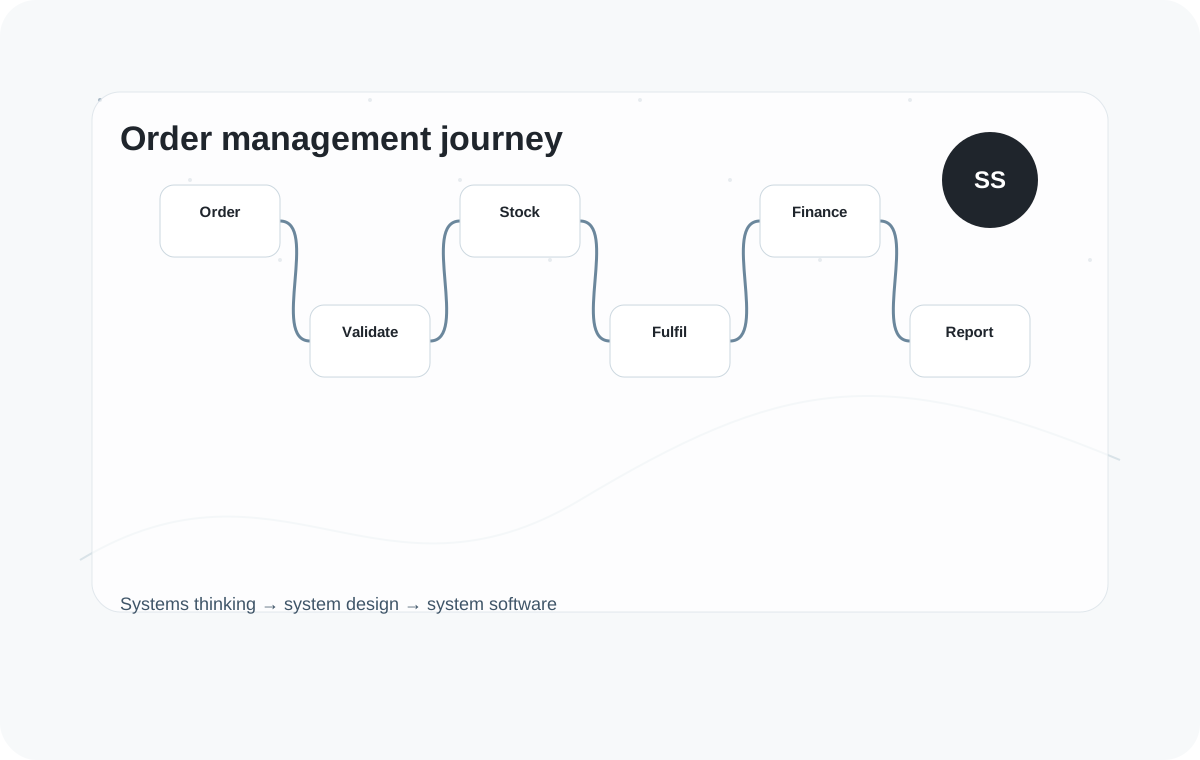
Order visibility
Every order triggers work across sales, operations, stock, finance, fulfilment and customer communication. If those activities are not connected, the business loses visibility and control.
Teams cannot quickly see where an order is, what is blocked or who owns the next step.
Staff copy order data between spreadsheets, ERP, finance, fulfilment or customer systems.
Pricing, approvals, fulfilment options or customer-specific processes do not fit generic software.
Progress depends on emails, reminders and individuals knowing what needs to happen next.
Problems are managed manually rather than through a visible, repeatable process.
Higher order volumes increase administration and reduce service consistency.
Order system design
We map the complete journey from order capture to completion, then design the system that supports it.
Capture order states, teams, documents, systems, exceptions and reporting needs.
Define order data, workflow states, permissions, rules and integration points.
Connect ERP, ecommerce, CRM, WMS, finance, courier and reporting platforms where required.
Trigger notifications, status changes, partner updates and internal tasks.
Create dashboards, exception queues and reporting that support operational decisions.
Outcomes
Teams can manage orders proactively rather than reacting to issues after they happen.
Track order progress, responsibilities, exceptions and service performance.
Reduce gaps between sales, operations, stock, finance and delivery.
Handle more orders without increasing manual administration at the same rate.
Connected order operations
These related pages help connect the wider order-to-fulfilment landscape.
Connect online ordering with stock, ERP, fulfilment, finance and reporting.
Explore →Link order workflows with the platforms that run the rest of the business.
Explore →Automate order handovers, notifications, approvals and exception handling.
Explore →FAQ
Yes. We design order management systems to integrate with existing ERP, finance, CRM, WMS, ecommerce and reporting platforms where APIs or robust data exchange methods are available.
Yes. We can support customer-specific pricing, approvals, staged fulfilment, document workflows, partner updates and exception management.
Not always. Sometimes the best solution is an operational layer that improves workflow, visibility and reporting around existing systems.
Control the order journey
We can help you design an order system that reflects how your operation really works.
Discuss your order workflow